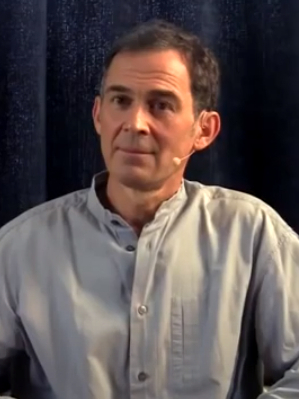
The Essence of Simplicity: Unveiling Truth in Experience
Rupert Spira's assertion that "Truth is the simplest of all experiences" invites us to reconsider our understanding of truth itself. In a world often clouded by complexity and contradiction, this statement serves as a gentle reminder that the essence of truth lies not in elaborate constructs or convoluted philosophies, but in the direct, unmediated experience of reality. This perspective is crucial, as it challenges us to peel away layers of distraction and confusion, urging us to engage with the simplicity that underlies our existence.
As we delve deeper into this notion, we begin to recognize that truth is not merely an abstract concept to be debated or dissected; rather, it is an experiential state that can be felt and lived. This simplicity is not a denial of the complexities of life but rather an invitation to embrace the profound clarity that arises when we connect with our true nature. In this light, Spira's words resonate as a call to return to the essence of our being, where truth reveals itself in the quiet moments of awareness and presence.
The image / the metaphor
At first glance, the phrase "the simplest of all experiences" evokes a sense of clarity and purity. The imagery conjured here is one of unadulterated awareness, free from the clutter of thoughts, beliefs, and societal expectations. The use of the word "experience" emphasizes the immediacy of truth; it is not something to be theorized or intellectualized but rather something to be directly encountered. This directness invites us to engage with our lived reality, suggesting that truth is accessible to anyone willing to look beyond the surface.
Diving deeper into the metaphor, we can see that simplicity does not equate to superficiality. Instead, it points to a profound depth that often eludes us in our quest for understanding. Just as a clear stream reveals the stones at its bottom, so too does the simplicity of truth allow us to see the foundational aspects of our existence. In this sense, Spira's quote encourages us to cultivate a discerning awareness that cuts through the noise, revealing the underlying simplicity that is often obscured by our complex narratives.
In the speaker's tradition
Rupert Spira's teachings are deeply rooted in the non-dual tradition, which emphasizes the interconnectedness of all existence and the realization of our true nature as consciousness. Concepts such as *sunyata* (emptiness) and *fana* (annihilation of the self) resonate with the idea that truth transcends the dualistic perceptions of self and other. In this context, the simplicity of truth is not merely a philosophical stance but a lived experience that emerges when we recognize our inherent unity with all that is.
In his work, Spira often references the *Upanishads*, ancient texts that explore the nature of reality and the self. One pertinent passage speaks to the idea that the ultimate truth is beyond description and conceptualization, echoing Spira's assertion that truth is found in the simplicity of direct experience. This alignment with the non-dual perspective invites us to explore the depths of our consciousness, where the complexities of thought dissolve into the pure awareness of being.
Living the teaching
Consider a modern scenario where the teaching of simplicity in truth can be applied: a moment of conflict in a workplace. In the heat of disagreement, emotions can cloud our perception, leading to misunderstandings and heightened tensions. However, if we pause to reconnect with the simplicity of our shared humanity, we may find that the essence of the conflict is not as complex as it seems. By focusing on the fundamental truth of our interconnectedness, we can navigate the situation with clarity and compassion, allowing for resolution and understanding.
Another application of this teaching can be found in personal relationships, particularly during challenging times. When faced with misunderstandings or emotional turmoil, it is easy to become entangled in narratives that complicate our experience. Yet, by returning to the simplicity of truth—acknowledging our feelings without judgment and recognizing the shared desire for connection—we can foster deeper intimacy and healing. This practice of grounding ourselves in the simplicity of our experiences allows us to transcend the complexities that often arise in human interactions.
A reflection
As we contemplate Spira's assertion that "Truth is the simplest of all experiences," we are invited to reflect on our own relationship with truth. In what ways do we complicate our understanding of reality through our thoughts and beliefs? How might we cultivate a more direct experience of truth in our daily lives? These questions encourage us to explore the simplicity that lies at the heart of our existence, guiding us toward a deeper awareness of our true nature.




Join the BrightStar Community
Stay connected with daily inspiration, event announcements, and community wisdom