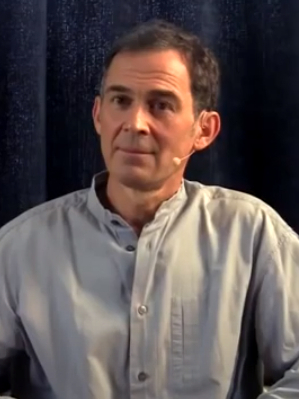
Awakening to the Depths of Consciousness
Rupert Spira's assertion that "All experience occurs within consciousness, never outside it" invites us to reconsider the very nature of our existence. This profound statement challenges the conventional understanding of experience as something external to us, urging a deeper exploration of the inner landscape of consciousness. By recognizing that all we perceive, feel, and think arises from within, we begin to appreciate the transformative power of awareness in shaping our reality. This understanding is not merely philosophical; it holds the potential to shift our entire approach to life.
As we delve into this quote, we uncover layers of meaning that resonate with the essence of non-dual philosophy. The idea that experience is contained within consciousness suggests a unity between the observer and the observed, blurring the lines that typically separate self from other. This perspective invites us to explore the implications of our consciousness as the canvas upon which the tapestry of life is woven. In doing so, we may find ourselves more attuned to the subtleties of our experiences and the interconnectedness of all existence.
The image / the metaphor
At its core, Spira's quote evokes a vivid image of consciousness as an expansive space, a vast ocean in which all experiences—thoughts, emotions, perceptions—float like waves. The choice of the word "within" emphasizes an intimate relationship between consciousness and experience, suggesting that our understanding of the world is not separate from our inner life. This imagery invites us to visualize consciousness not as a mere backdrop but as an active participant in the unfolding of our experiences, shaping and coloring them in profound ways.
Diving deeper into this metaphor, we can see consciousness as a lens through which we perceive reality. Just as a lens can alter the colors and clarity of an image, our consciousness influences how we interpret our experiences. This understanding encourages us to examine the quality of our consciousness—whether it is clouded by distractions or illuminated by clarity—and how this affects our engagement with the world around us. In this light, the cultivation of awareness becomes essential, as it allows us to refine our lens and experience life more fully.
In the speaker's tradition
Rupert Spira's insights are deeply rooted in the non-dual tradition, which emphasizes the unity of consciousness and the illusory nature of separation. Concepts such as *advaita* (non-duality) and *sunyata* (emptiness) resonate with the idea that our perceived separateness is a construct of the mind. In this context, the recognition that all experience occurs within consciousness aligns with the teachings of sages who have pointed to the underlying oneness of existence. This perspective invites us to transcend dualistic thinking and embrace a more holistic understanding of our place in the universe.
In texts such as the *Upanishads* and the teachings of Ramana Maharshi, we find echoes of Spira's assertion. The *Upanishads* speak of *Brahman*, the ultimate reality, as the source of all consciousness, reinforcing the idea that our individual experiences are manifestations of a singular, universal consciousness. Similarly, Ramana Maharshi's inquiry into the nature of the self leads us to recognize that the true essence of our being is not separate from the greater whole. These teachings serve as a reminder that our journey inward is also a journey toward understanding our interconnectedness with all that is.
Living the teaching
Consider a modern scenario where this teaching can be applied: a moment of frustration during a daily commute. As we sit in traffic, our minds may race with thoughts of impatience and irritation, perceiving the situation as an external obstacle. However, by recognizing that this experience is occurring within our consciousness, we can shift our perspective. Instead of allowing external circumstances to dictate our emotional state, we can cultivate a sense of inner peace, understanding that our reactions are shaped by our consciousness rather than the traffic itself.
This teaching also finds relevance in our relationships. Imagine a disagreement with a loved one, where emotions run high and misunderstandings abound. By remembering that all experiences, including conflict, arise within consciousness, we can approach the situation with greater empathy and awareness. This perspective encourages us to listen deeply and respond thoughtfully, recognizing that our perceptions are influenced by our inner state. In doing so, we create space for healing and connection, transforming potential discord into an opportunity for growth.
A reflection
As we contemplate Spira's profound statement, we are invited to reflect on the nature of our own consciousness. How often do we find ourselves attributing our experiences to external circumstances, rather than recognizing the role of our inner landscape? This inquiry opens a pathway to deeper understanding and transformation. In this light, consider this question: What would shift in your life if you fully embraced the idea that all experience occurs within your consciousness, never outside it?



Join the BrightStar Community
Stay connected with daily inspiration, event announcements, and community wisdom